
Spouse Visa Documents from Thailand — Checklist and Certification Order
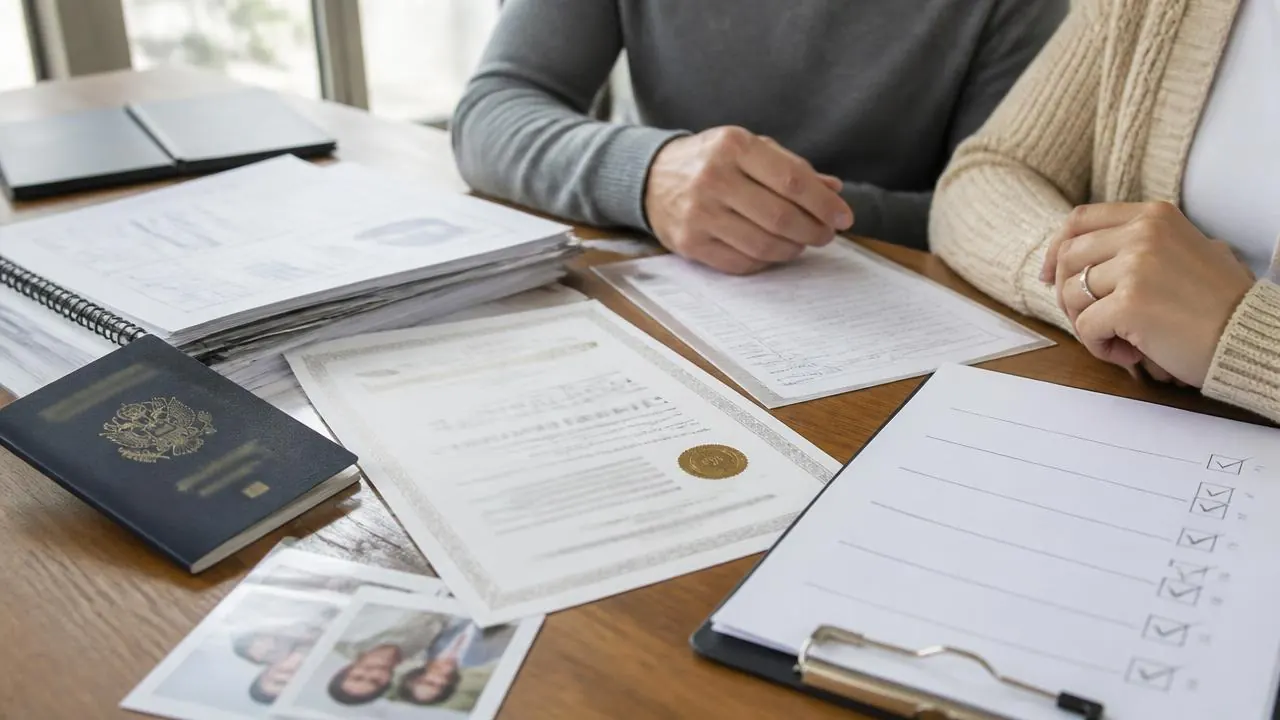
A spouse or partner visa file built on Thai documents rarely fails because a document is missing. It fails because the documents were certified in the wrong order, translated by a practitioner the authority does not recognise, or issued too early to sit inside the validity window. Fix the destination submission date first, then work backwards through the embassy step, the translation, and the certification of the originals.
1. The document set
- Marriage registration and marriage certificate: Request a current certified issue from the district office; older household copies are often refused.
- House registration: Confirm the current address entry matches the address stated elsewhere in the application.
- National identity card: Check that the name and title match the passport, including any recent change.
- Birth certificate: Needed where the authority verifies identity or parentage, particularly when children are included.
- Name-change or divorce records: Any discrepancy in the file must be explained by a document, not by a covering letter.
- Police clearance certificate: Time this to the submission date, since destination authorities usually set a validity window.
2. The certification sequence
- Confirm the destination checklist, accepted translation type, and validity window
- Request current certified originals from the Thai issuing offices
- Notarise private documents such as statements, affidavits, and sponsorship letters
- Certify the Thai originals where the destination requires it
- Translate the complete set, including seal and stamp text
- Certify the translations and complete the embassy or apostille step
3. Consistency is the real test
Case officers compare documents against each other. If the passport, identity card, marriage record, and translation disagree about a name, a date, or an address, the file raises a question the officer must resolve — and the fastest resolution available to them is a request for more evidence or a refusal. Before submission, read the whole set as one document and make every field agree, using an official record to explain any change rather than a note.
4. Relationship evidence alongside the certified set
Certified civil documents establish the legal relationship; separately, the authority assesses whether the relationship is genuine and continuing. Present that evidence chronologically: shared accommodation, joint financial arrangements, travel together, and continuous communication. A short index at the front of the bundle makes the officer's job easier, which works in the applicant's favour.
5. Mistakes that cause refusals
- Different transliterations of the same name across documents in one file
- Translating before certification, so certification never appears in the translated set
- Submitting photocopies where an original or authority-certified copy is required
- Documents issued too early and outside the destination validity window
- Relationship evidence presented as an unsorted bundle with no chronology
- A power of attorney drafted too narrowly to cover the whole certification chain
6. Frequently asked questions
- Which Thai documents does a spouse or partner visa file usually need?
- Typically the marriage registration and marriage certificate, house registration, national identity card, birth certificate where relationship or identity must be proved, name-change records if any, and a police clearance certificate where the destination requires one. The exact list is set by the destination authority, so treat this as a planning baseline rather than a final list.
- In what order should documents be certified and translated?
- Obtain current originals, notarise any private documents such as affidavits or statements, certify the Thai originals with the Department of Consular Affairs where required, translate into the language the authority accepts, certify the translation if asked, and finally complete any embassy or apostille step.
- Do translations need to be certified as well?
- Usually yes. Most authorities require the translation to be certified or produced by a practitioner they recognise. Australian applications generally expect a NAATI-certified translation, while other destinations may accept certification by the Thai Department of Consular Affairs.
- How recent must the documents be?
- Many authorities require civil records and police certificates issued within three or six months of submission. Plan backwards from the submission date, because certifying a document too early can make an otherwise perfect file unusable.
- What relationship evidence is expected alongside the certified documents?
- Certified civil documents prove the legal relationship; separately, most authorities want evidence of a genuine and continuing relationship, such as shared accommodation records, joint financial arrangements, travel history, and communication history. Organise this evidence chronologically rather than as a loose bundle.
- Can one partner arrange the Thai documents alone?
- Often yes, through a power of attorney, but the wording must cover every step: requesting the record, collecting it, submitting it for certification, and lodging it with the embassy. A narrowly drafted authority stalls halfway and has to be redrafted, which costs more time than drafting it broadly at the start.
- What causes most refusals at the document stage?
- Name spellings that differ between the passport and the Thai records, incomplete translations that omit seal text, certifications performed out of order, documents outside the validity window, and missing name-change or divorce records that explain a discrepancy in the file.
7. References and related services
References: Department of Consular Affairs, Ministry of Foreign Affairs (Thailand) · Bureau of Registration Administration, Department of Provincial Administration
- Marriage and family document service
- NAATI-certified translation service
- Apostille vs legalisation, country by country
Content reviewed on 2026-08-10. This guide is general information for planning purposes and is not a determination made on behalf of any authority. Please confirm current requirements with the destination authority before you proceed.