
Notarial Services & International Documents
Notarial Services Attorney, certified translation and legalisation for use abroad

This practice covers certification by a Notarial Services Attorney, certified translation, and legalisation of documents so they can be used abroad — or so foreign documents can be used in Thailand. The order of the steps is what usually goes wrong: the receiving authority's requirement is confirmed first, then translation, certification and legalisation follow in the sequence that authority accepts.
Who this page is for
- Students and applicants sending Thai documents to a foreign institution
- People signing a power of attorney for use in another country
- Companies certifying corporate documents for an overseas transaction
- Foreigners whose documents must be usable before a Thai authority
- Anyone whose document was rejected abroad and must be redone
What the firm actually handles
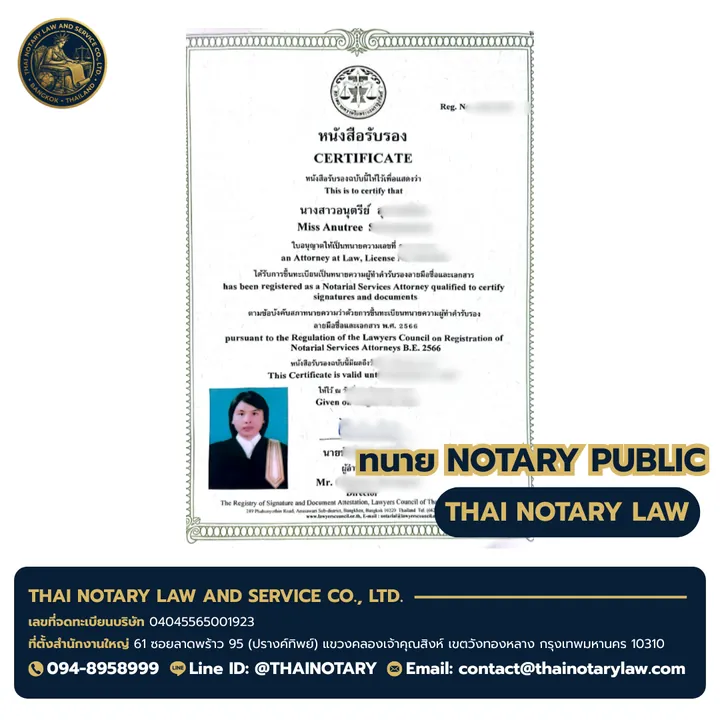
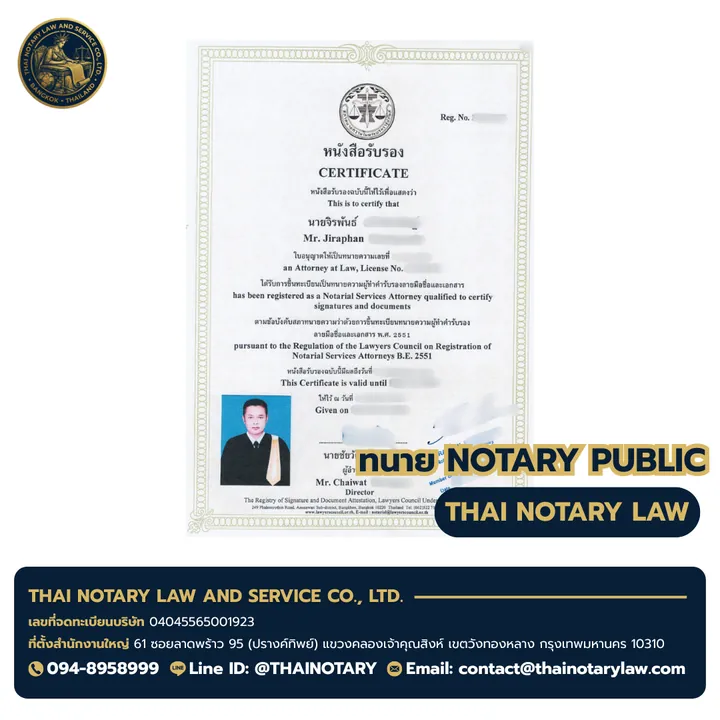
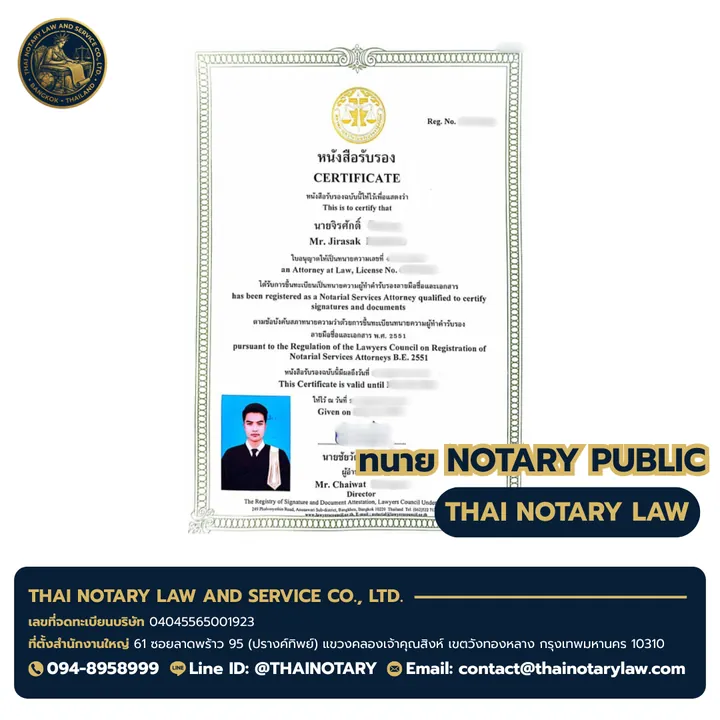
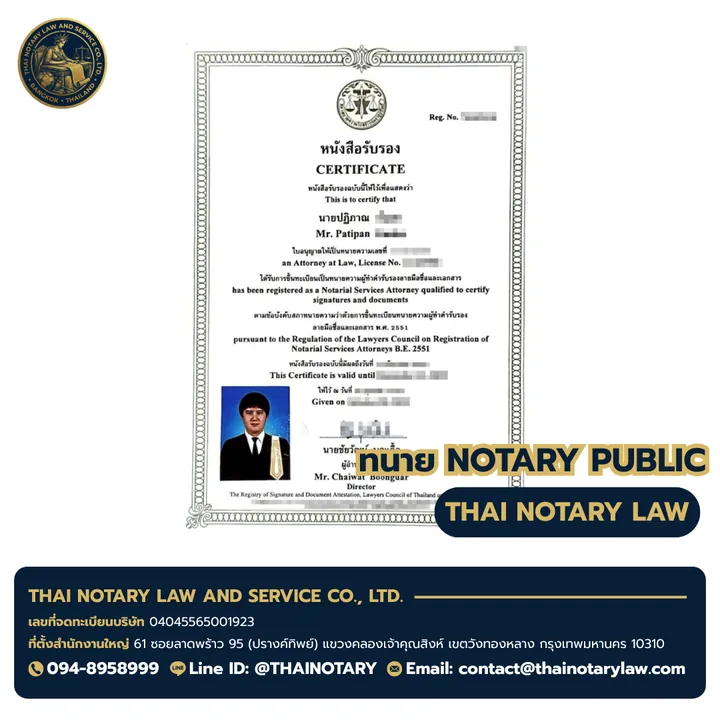
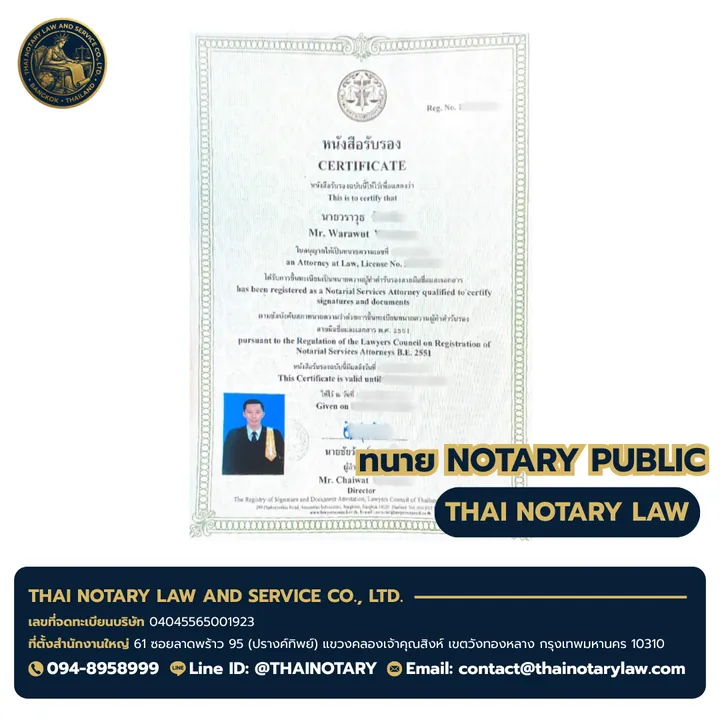
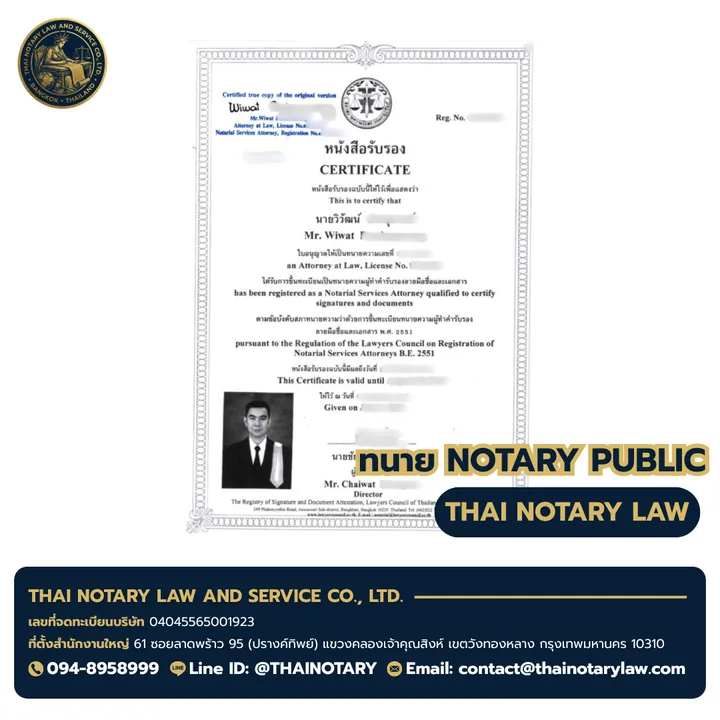
- Certification of signatures, copies and declarations by a Notarial Services Attorney
- Certified translation of Thai and foreign documents
- Legalisation through the channel the receiving authority requires
- Powers of attorney and affidavits for use abroad
- Corporate document sets for overseas filings and transactions
- Advice on the correct sequence for a specific destination country
Matters clients bring us
- A university abroad requires certified copies of a transcript and degree
- A power of attorney must be signed in Thailand and used overseas
- Company documents are needed for an overseas bank or registry
- An affidavit is required for an immigration or court process abroad
- A foreign marriage or birth certificate must be used in Thailand
- A document was rejected because the steps were done in the wrong order
Documents to bring to the first meeting
- The original document, plus the copies to be certified
- Passport or ID card of the person signing
- The receiving authority's written requirement, if you have it
- The destination country and the purpose of use
- Company affidavit and authority documents, for corporate documents
- Any previous certification or translation already obtained
If some documents are missing, send what you have. The lawyer will tell you which office issues the remaining ones and which documents need certified translation before they can be used.
How the work proceeds
- 1Tell us the destination country, the receiving authority and the purpose
- 2We confirm the form of certification that authority accepts
- 3We prepare the certified translation where one is needed
- 4The Notarial Services Attorney certifies the signature, copy or declaration
- 5We arrange legalisation through the required channel
- 6We hand over the completed set with copies for your records
Pitfalls and common misunderstandings
Confirm the requirement before starting
Different countries and institutions accept different forms and sequences. Starting without the receiving authority's requirement in writing is the main reason documents come back and have to be redone.
Sequence errors cannot be patched
Translating after certification, or legalising before the certification the authority expects, usually means repeating steps from the beginning. The order is set at the outset for that reason.
Certification confirms form, not the underlying facts
A Notarial Services Attorney certifies matters such as a signature or that a copy corresponds to the original. It is not a verification of the truth of the document's contents, and no one should represent it that way.
Notarial certification, certified translation and legalisation
Most files need more than one of these. This shows what each step actually does.
| Point | Notarial certification | Certified translation | Legalisation |
|---|---|---|---|
| What it does | Certifies a signature, a copy or a declaration | Produces a translation with a certification of accuracy | Confirms the document for official use in another jurisdiction |
| Who performs it | A Notarial Services Attorney | A qualified translator, certified as required | The authority or channel the destination accepts |
| Needed when | The receiving party requires certified signatures or copies | The document is not in the required language | The destination requires official confirmation |
| Typical inputs | Original document and the signatory's identification | The source document and the target language | The certified and translated document |
| Common pitfall | Certifying a document the destination does not accept in that form | Translating before the final version is confirmed | Doing it before the certification step it depends on |
We confirm the requirement of the specific receiving authority before beginning, so the sequence is right the first time.
Hand the whole matter to the firm
Because translation, notarial certification and legalisation are handled in the same office, the file moves through the steps in the correct order without being passed between separate providers. Fees are quoted per document set after we see the requirement.
Notarial Services & International Documents: frequently asked questions
- What does a Notarial Services Attorney in Thailand do?
- A lawyer licensed as a Notarial Services Attorney certifies matters such as a signature, that a copy corresponds to an original, or a declaration made before them. It confirms form and execution rather than verifying that the document's contents are true.
- Which comes first, translation or certification?
- It depends on the receiving authority. Some require the original certified first and then translated; others require a certified translation before legalisation. Because reversing the order usually means redoing the work, we confirm the requirement before starting.
- Does Thailand issue an apostille?
- Thailand's legalisation of documents for overseas use runs through its own channel rather than an apostille under the Hague Convention on Legalisation. Which form your destination accepts should be confirmed with that receiving authority before the file is prepared.
- Can a power of attorney be signed here and used abroad?
- Yes, and it commonly requires certification of the signature, a certified translation into the destination language, and legalisation. The wording also has to satisfy the receiving institution, so send their template or requirement if you have one.
- How can a foreign document be used in Thailand?
- Usually it is certified in its country of origin, then translated into Thai with the translation certified, and legalised through the route the Thai receiving authority requires. Different Thai authorities can require slightly different forms.
- How long does the whole process take?
- It depends on the document type, the destination and the channels involved, and parts of it are outside the firm's control. We tell you which steps have external timelines so you can plan submission deadlines with a margin.
- Do I have to attend in person?
- Certification of your own signature requires you to sign before the Notarial Services Attorney with identification. Certification of copies and translation work can often proceed without you present once the originals are available.
- My document was rejected abroad. Can it be fixed?
- Often yes, but it usually means repeating the steps in the correct sequence. Send the rejection notice, because it normally states exactly which form the receiving authority requires, which is what determines the corrected route.
Practice areas often handled together with this one
- Family Law
Marriage, prenuptial agreements, divorce, child custody and support
- Corporate & Commercial
Company formation, registry changes, contracts and foreign-investment structures
- Estates, Wills & Succession
Wills, estate administrators and transferring assets to heirs
Speak with the lawyer responsible for Notarial Services & International Documents
เล่าเรื่องหรือส่งภาพเอกสารมาให้ทีมงานตรวจเบื้องต้น ทนายจะแจ้งแนวทาง เอกสารที่ต้องใช้ กำหนดเวลาที่ต้องระวัง และค่าบริการเป็นลายลักษณ์อักษรก่อนเริ่มงาน