

Skip to content
ทีมทนาย Notary Public บริษัท Thai Notary Law & Service — ทนายผู้ได้รับใบอนุญาตทำคำรับรองลายมือชื่อและเอกสารจากสภาทนายความในพระบรมราชูปถัมภ์

ทีมทนายผู้ได้รับใบอนุญาต Notarial Services Attorney

ใบอนุญาตจากสภาทนายความในพระบรมราชูปถัมภ์

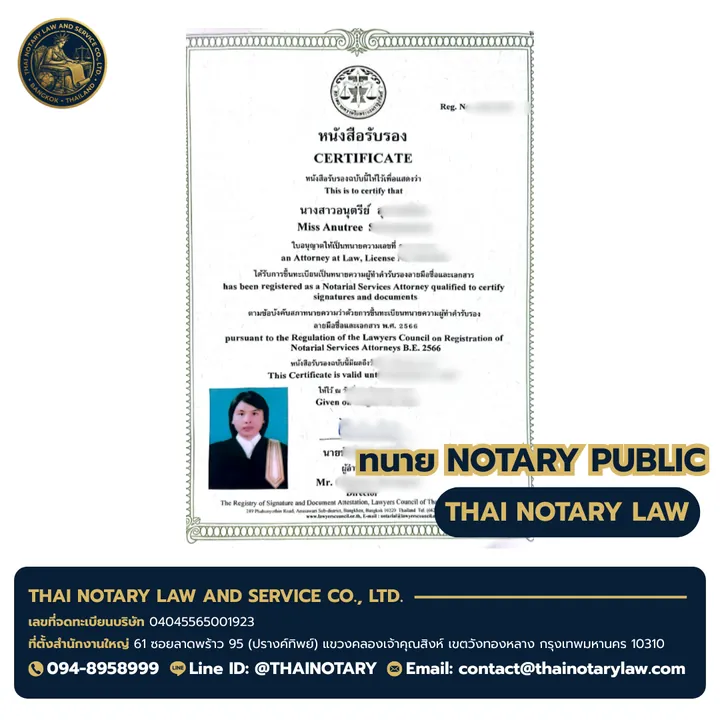
  • ใบอนุญาตทนายทำคำรับรองลายมือชื่อและเอกสาร (Notary Public) ของ ทนายอนุตรีย์ Miss Anutaree

    ทนายอนุตรีย์Miss Anutaree

    Notarial Services Attorney • Sworn Translator

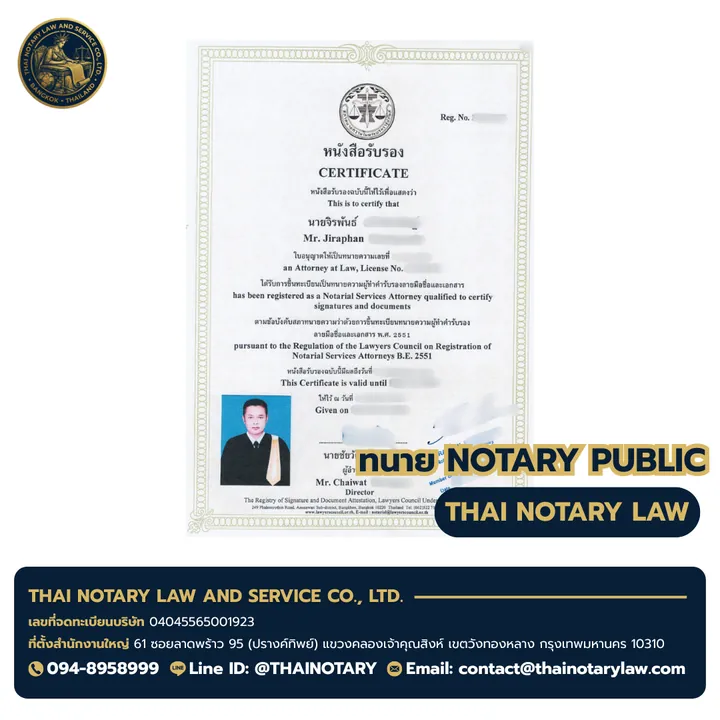
  • ใบอนุญาตทนายทำคำรับรองลายมือชื่อและเอกสาร (Notary Public) ของ ทนายจิรพันธ์ Mr. Jirapan

    ทนายจิรพันธ์Mr. Jirapan

    Notarial Services Attorney • Corporate Counsel

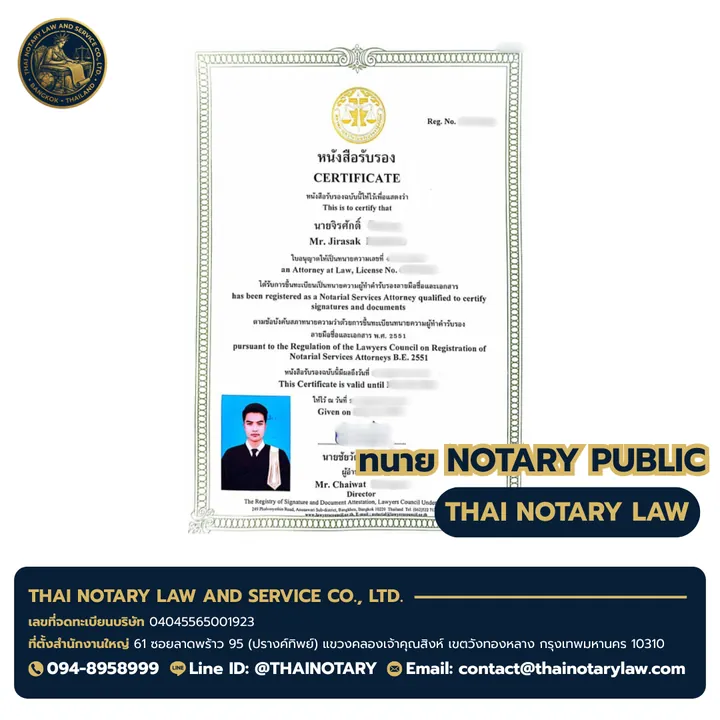
  • ใบอนุญาตทนายทำคำรับรองลายมือชื่อและเอกสาร (Notary Public) ของ ทนายจิรศักดิ์ Mr. Jirasak

    ทนายจิรศักดิ์Mr. Jirasak

    Notarial Services Attorney • Litigation

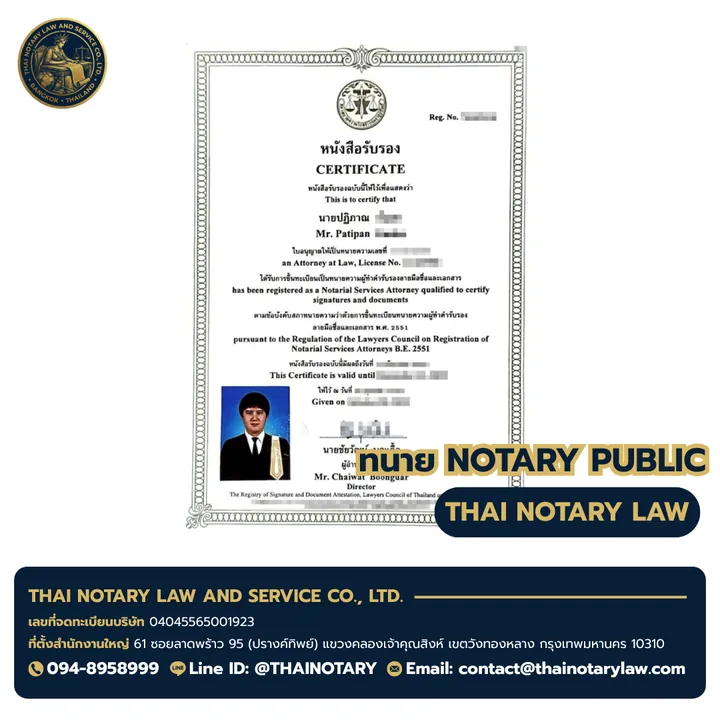
  • ใบอนุญาตทนายทำคำรับรองลายมือชื่อและเอกสาร (Notary Public) ของ ทนายปฏิภาณ Mr. Patipan

    ทนายปฏิภาณMr. Patipan

    Notarial Services Attorney • Immigration

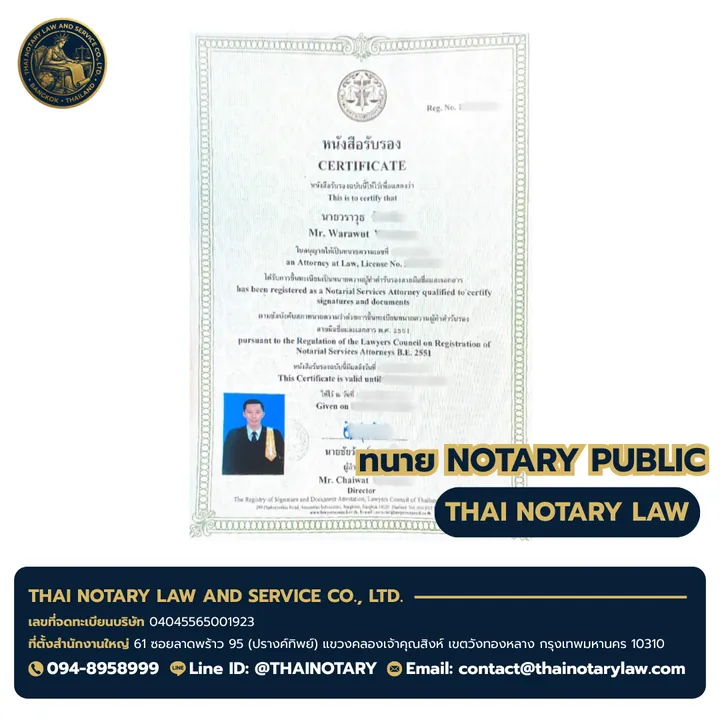
  • ใบอนุญาตทนายทำคำรับรองลายมือชื่อและเอกสาร (Notary Public) ของ ทนายวราวุธ Mr. Warawut

    ทนายวราวุธMr. Warawut

    Notarial Services Attorney • Real Estate

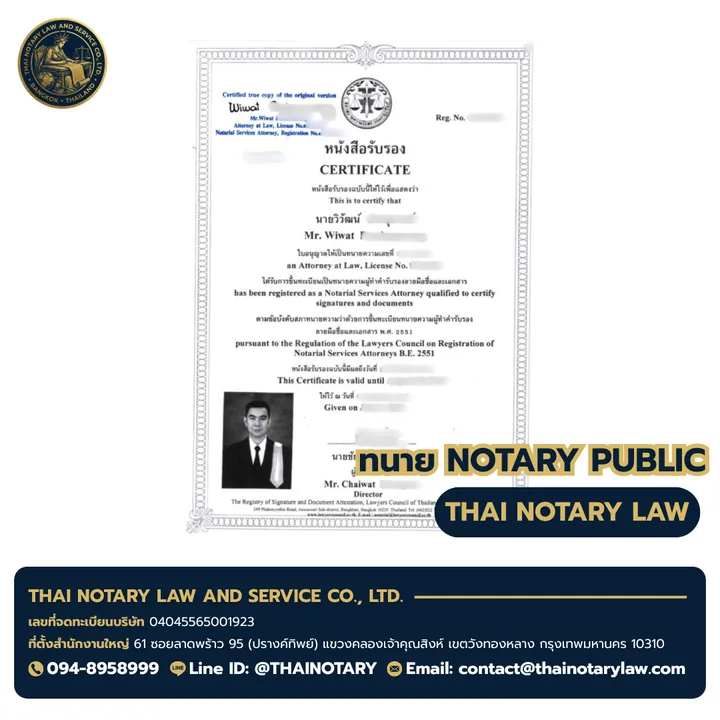
  • ใบอนุญาตทนายทำคำรับรองลายมือชื่อและเอกสาร (Notary Public) ของ ทนายวิวัฒน์ Mr. Wiwat

    ทนายวิวัฒน์Mr. Wiwat

    Notarial Services Attorney • Family & Marriage

เลื่อนดูใบอนุญาตทั้งหมด →

Certified translation vs notarised translation

A certified translation is a statement by the translator or agency that the translation is complete and accurate; nothing about the translator's identity is independently verified. A notarised translation adds a second layer: a Notarial Services Attorney witnesses and certifies the signature on that statement. Notarisation never verifies the accuracy of the wording — it verifies who signed. Universities and most private recipients accept certification alone; embassies, courts and foreign registries usually want the notarised layer, and some also require MFA legalisation on top.

Point-by-point comparison

 Certified translationNotarised translation
What is actually attestedCompleteness and accuracy of the translation, stated by the translatorIdentity and signature of the person who signed the certification
Who signsTranslator or translation company representativeNotarial Services Attorney licensed by the Lawyers Council of Thailand
Typical turnaroundSame day to 2 working daysAdd roughly 1 working day
Typical costPer-page translation fee onlyTranslation fee plus a per-signature certification fee
Usually enough forUniversities, employers, banks, internal company filesEmbassies, foreign courts, company registries, immigration authorities
Next step in the chainOften needs notarisation afterwardsMay still need MFA legalisation and destination-embassy legalisation

Certified translationchoose this when

  • The recipient's written instruction only says "certified translation"
  • The document stays inside Thailand or goes to a private organisation
  • You need the fastest and cheapest route and can re-certify later if asked

Notarised translationchoose this when

  • The recipient asks for a notary, notarisation or "sworn" signature
  • The document is going to a foreign court, registry or embassy
  • The next step in the chain is MFA or embassy legalisation

Frequently asked questions

Does notarisation make the translation legally accurate?

No. Notarisation certifies who signed the certification statement, not the quality of the wording. Accuracy remains the responsibility of the translator who signed. This is the single most common misunderstanding we correct for clients.

Can the same person translate and notarise?

In practice they are separate roles: the translator signs the accuracy statement and a Notarial Services Attorney certifies that signature. Our team coordinates both so the document leaves with one consistent set of stamps.

Will an embassy accept a certified translation without notarisation?

Some do and many do not — it depends entirely on the embassy and the document type. Always ask for the requirement in writing, because embassies change their formats without notice.

How much does the notarised layer add?

It adds a per-signature attorney certification fee and usually about one working day. The exact amount depends on the number of signatures and pages, so we quote after seeing the document.

Does either route need MFA legalisation?

If the document is going abroad, very often yes. The Department of Consular Affairs charges THB 200 per stamp for the normal service and THB 400 per stamp for the express service.

Is an apostille an option instead?

Not yet. Thailand acceded to the HCCH Apostille Convention on 30 June 2026 and it enters into force for Thailand on 28 February 2027. Until that date the MFA-plus-embassy chain remains the route.

Send us a photo of the document plus the written requirement from the receiving authority, and we will map the exact chain — translation, lawyer certification, MFA, embassy — before you pay for anything. Call 094-895-8999 or LINE @Thainotary.

Information current as of August 2026. Requirements change — confirm the exact certification format with the authority that will receive the document before you file. Acceptance is at their discretion.

Other comparisons

Frequently asked questions