Is NAATI recognised by Thai government offices?
NAATI is an Australian credential. Thai offices look for a certified translation in their own accepted format, so a NAATI translation may need to be recertified locally for Thai use.
ทนายผู้ได้รับใบอนุญาต • ทะเบียนนิติบุคคล 0405565001923

ทีมทนายผู้ได้รับใบอนุญาต Notarial Services Attorney
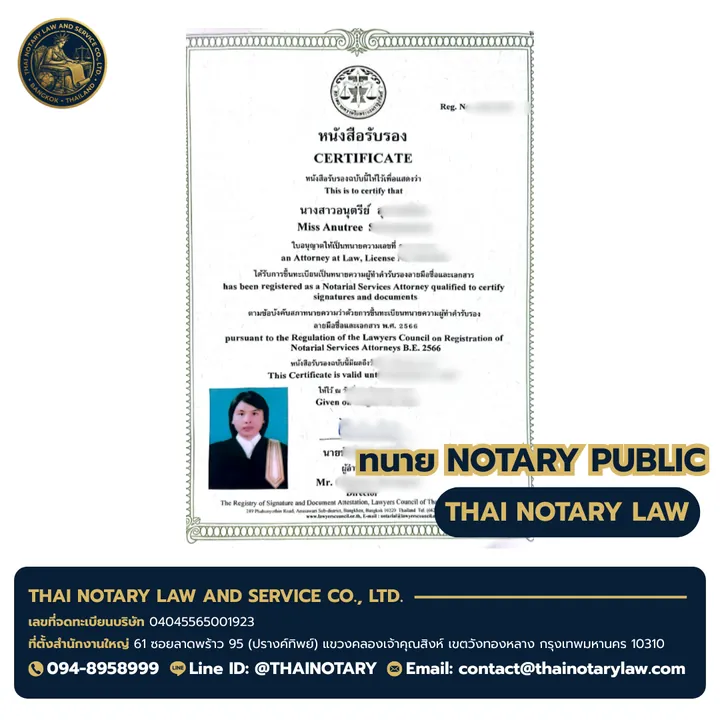
ทนายอนุตรีย์ • Miss Anutaree
Notarial Services Attorney • Sworn Translator
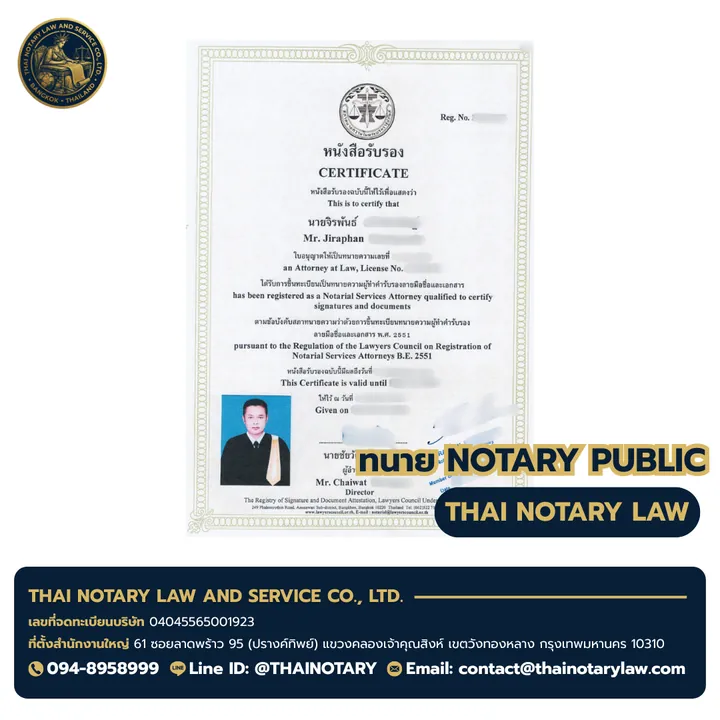
ทนายจิรพันธ์ • Mr. Jirapan
Notarial Services Attorney • Corporate Counsel
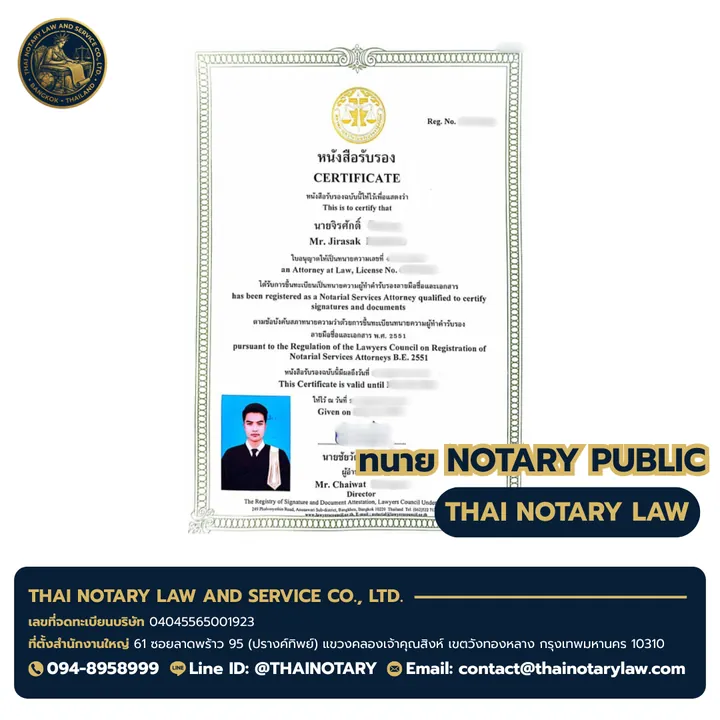
ทนายจิรศักดิ์ • Mr. Jirasak
Notarial Services Attorney • Litigation
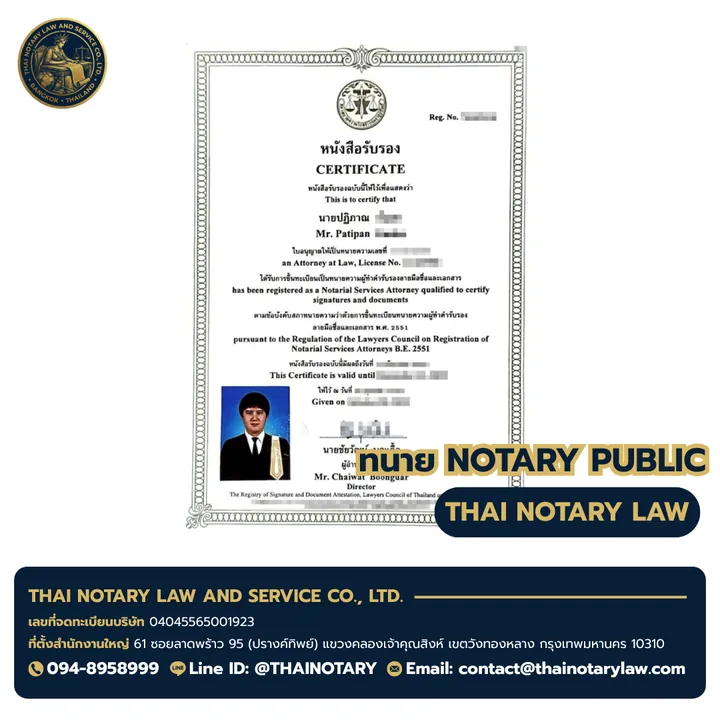
ทนายปฏิภาณ • Mr. Patipan
Notarial Services Attorney • Immigration
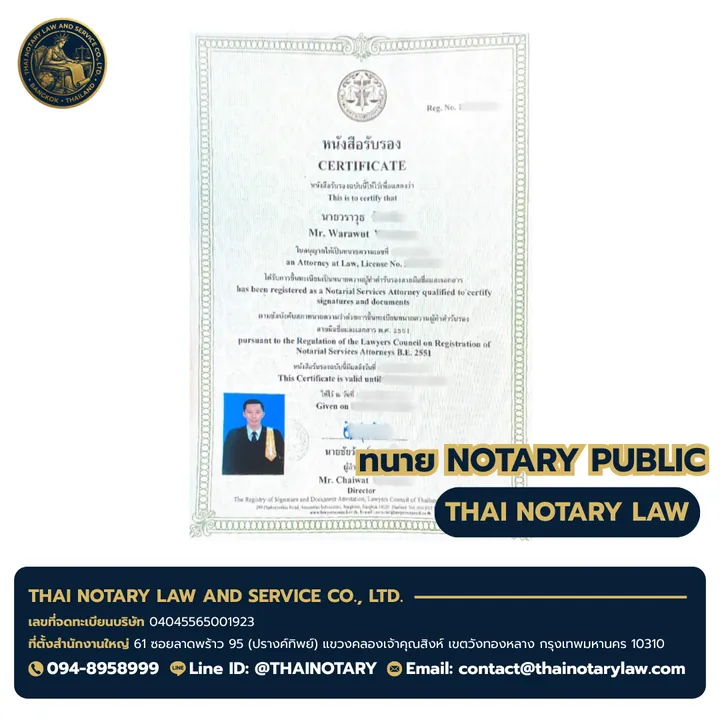
ทนายวราวุธ • Mr. Warawut
Notarial Services Attorney • Real Estate
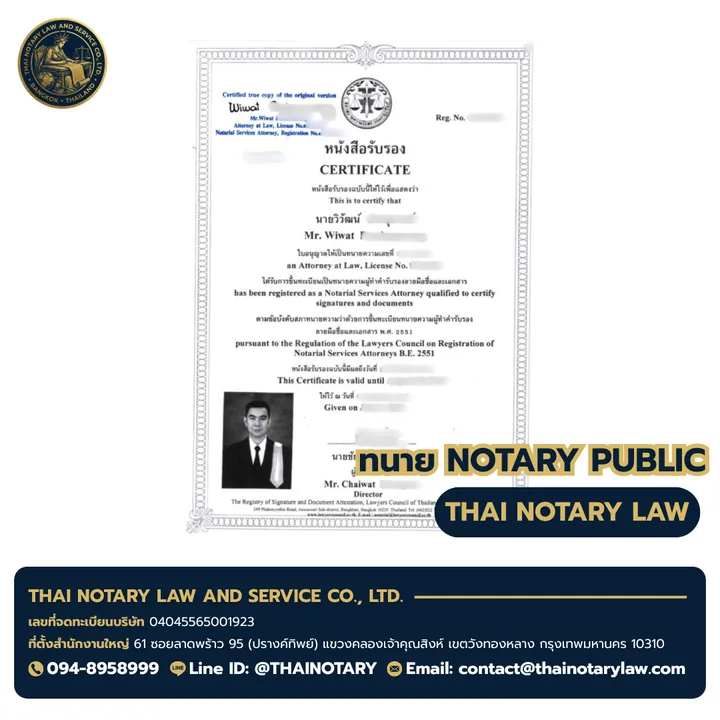
ทนายวิวัฒน์ • Mr. Wiwat
Notarial Services Attorney • Family & Marriage
เลื่อนดูใบอนุญาตทั้งหมด →
| NAATI-certified translation | Thai certified translation | |
|---|---|---|
| Credentialing body | NAATI, Australia (naati.com.au) | No Thai register; translator or agency self-certifies |
| Visible marking | Practitioner stamp with certification number and expiry | Certification statement, translator signature, agency seal |
| Primary audience | Australian government, universities, courts | Thai authorities, embassies in Bangkok, third countries |
| Legalisation needed | Usually not for Australian domestic use | Often followed by lawyer certification and MFA legalisation |
| Where it is produced | By a credentialed practitioner, wherever they are based | In Thailand, matched to the Thai chain of stamps |
| Typical turnaround | Depends on practitioner availability for the language pair | Same day to a few working days plus legalisation time |
NAATI is an Australian credential. Thai offices look for a certified translation in their own accepted format, so a NAATI translation may need to be recertified locally for Thai use.
Yes — some clients need a NAATI version for Australia and a separately certified Thai version for local filing. They are prepared as two deliverables from the same source document.
Its published guidance expects translations by appropriately credentialed translators, and NAATI is the standard credential in Australia. Always follow the wording of the specific application guidance you are filing under.
For Australian domestic use, generally no. If the same document is then presented to a Thai authority or a third-country embassy, the Thai chain may be requested.
Neither route is inherently faster; availability of a practitioner for your language pair and the MFA queue are the usual bottlenecks. We give a realistic range once we know the language and destination.
Ask them in writing and send us the reply. Choosing on a guess is the main reason documents are translated twice.
Send us a photo of the document plus the written requirement from the receiving authority, and we will map the exact chain — translation, lawyer certification, MFA, embassy — before you pay for anything. Call 094-895-8999 or LINE @Thainotary.
Information current as of August 2026. Requirements change — confirm the exact certification format with the authority that will receive the document before you file. Acceptance is at their discretion.