
Can I submit both versions?
Often yes, and for high-stakes filings it is a sensible hedge. Confirm the recipient accepts a bilingual bundle rather than a single language.
ทนายผู้ได้รับใบอนุญาต • ทะเบียนนิติบุคคล 0405565001923

ทีมทนายผู้ได้รับใบอนุญาต Notarial Services Attorney
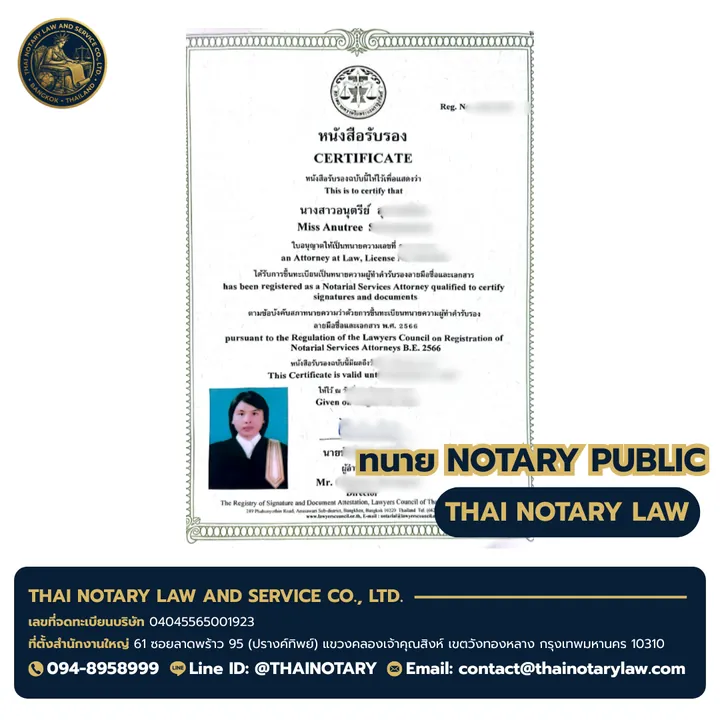
ทนายอนุตรีย์ • Miss Anutaree
Notarial Services Attorney • Sworn Translator
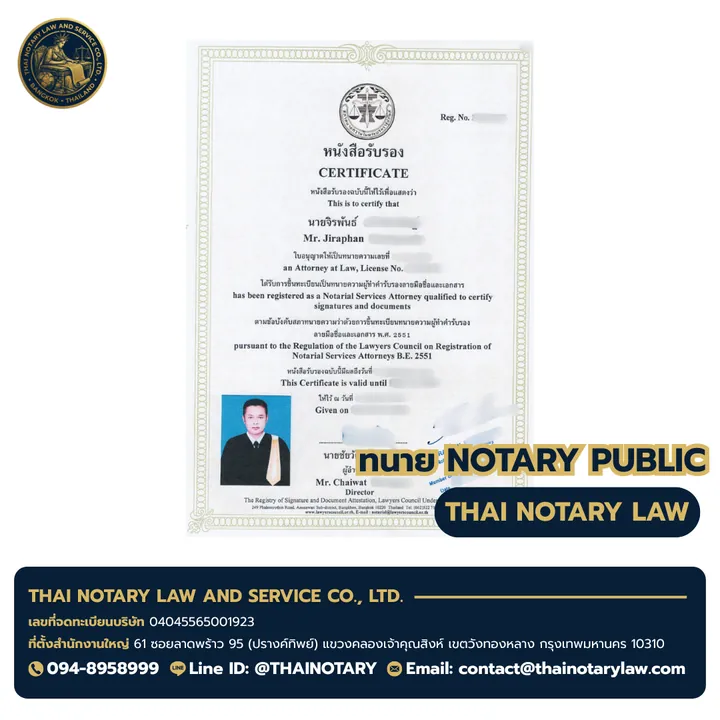
ทนายจิรพันธ์ • Mr. Jirapan
Notarial Services Attorney • Corporate Counsel
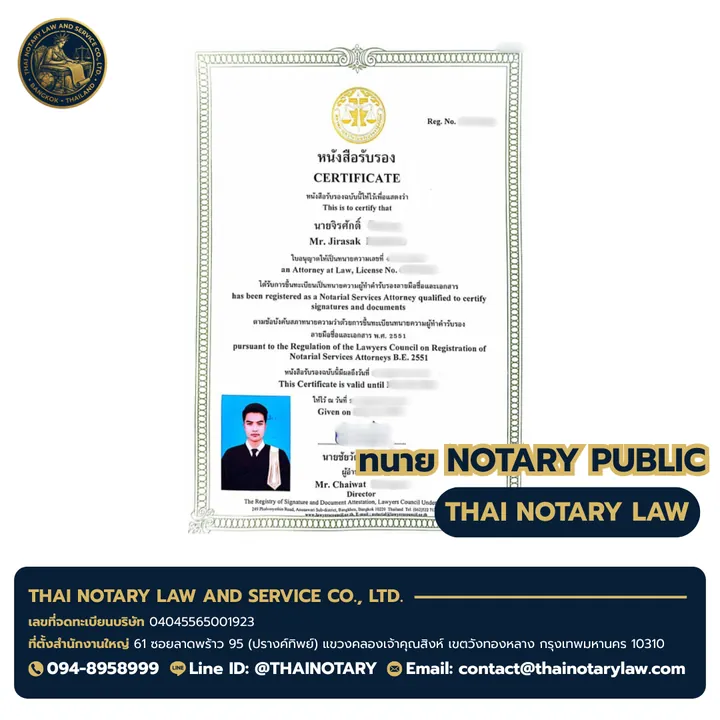
ทนายจิรศักดิ์ • Mr. Jirasak
Notarial Services Attorney • Litigation
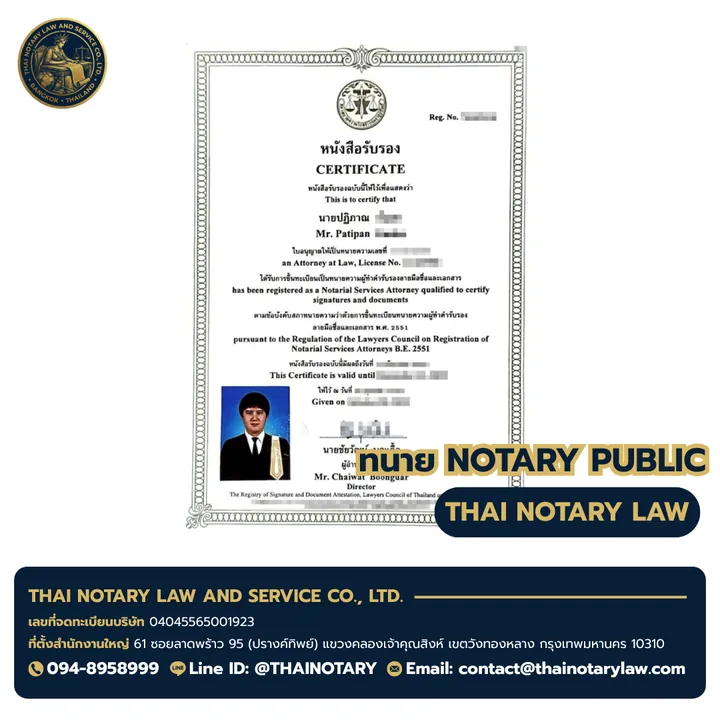
ทนายปฏิภาณ • Mr. Patipan
Notarial Services Attorney • Immigration
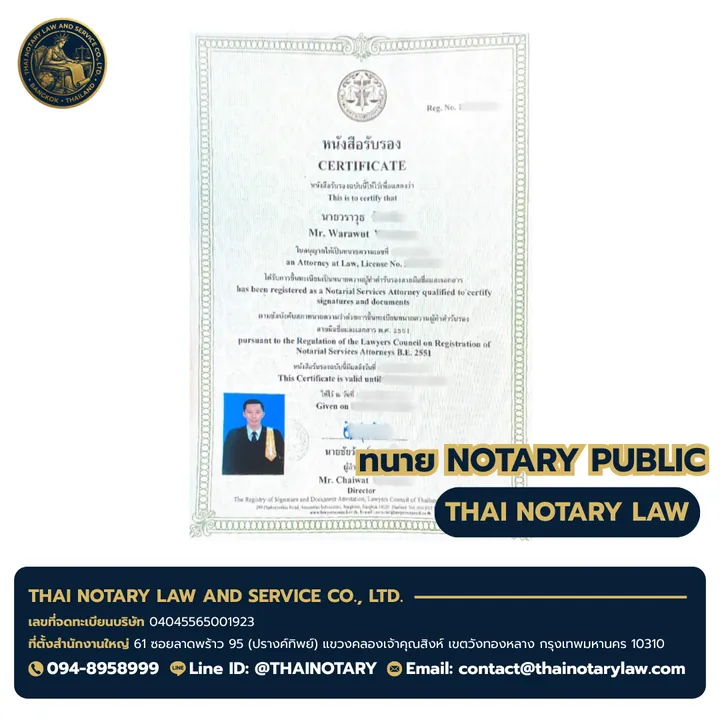
ทนายวราวุธ • Mr. Warawut
Notarial Services Attorney • Real Estate
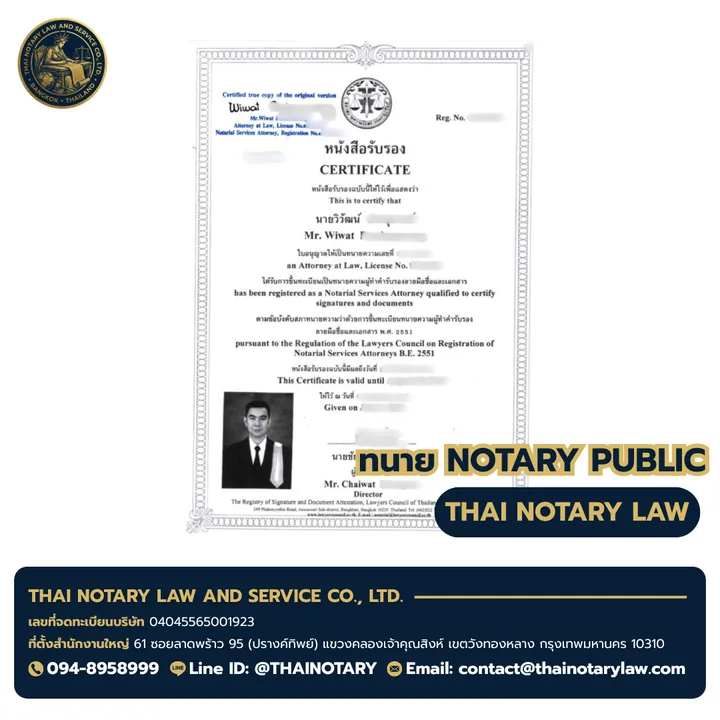
ทนายวิวัฒน์ • Mr. Wiwat
Notarial Services Attorney • Family & Marriage
เลื่อนดูใบอนุญาตทั้งหมด →
| Into English | Into the destination language | |
|---|---|---|
| MFA legalisation | Routine for Thai↔English | Often not available; legalise the Thai or English version instead |
| Chain length | Shortest — one translation, one chain | Longer, and may add a translation in the destination country |
| Cost | Lower per page for most documents | Higher, especially for less common languages |
| Rejection risk | Higher where the authority reads only its own language | Lower when the requirement names that language |
| Turnaround | Fastest, translators widely available | Depends on availability for the language pair |
| Best used for | Embassies in Bangkok, international schools, banks | Foreign registries, courts and municipal offices abroad |
Often yes, and for high-stakes filings it is a sensible hedge. Confirm the recipient accepts a bilingual bundle rather than a single language.
Consular legalisation is centred on Thai and English. For Japanese we normally legalise the Thai or English version and attach the Japanese translation with a certification statement.
It is common and usually accepted, but every relay step adds a chance of terminology drift. For legal instruments we prefer translating directly from the Thai source.
English is cheaper up front. It stops being cheaper the moment the destination rejects it and you pay for a second translation abroad.
Ask the receiving office for their document checklist by email or download it from their official site. Send it to us and we will match the format exactly.
Yes. Name spellings should follow the passport exactly, since a mismatch between passport and translation is one of the most frequent reasons documents are sent back.
Send us a photo of the document plus the written requirement from the receiving authority, and we will map the exact chain — translation, lawyer certification, MFA, embassy — before you pay for anything. Call 094-895-8999 or LINE @Thainotary.
Information current as of August 2026. Requirements change — confirm the exact certification format with the authority that will receive the document before you file. Acceptance is at their discretion.